What Makes AI Web Design Effective in 2026
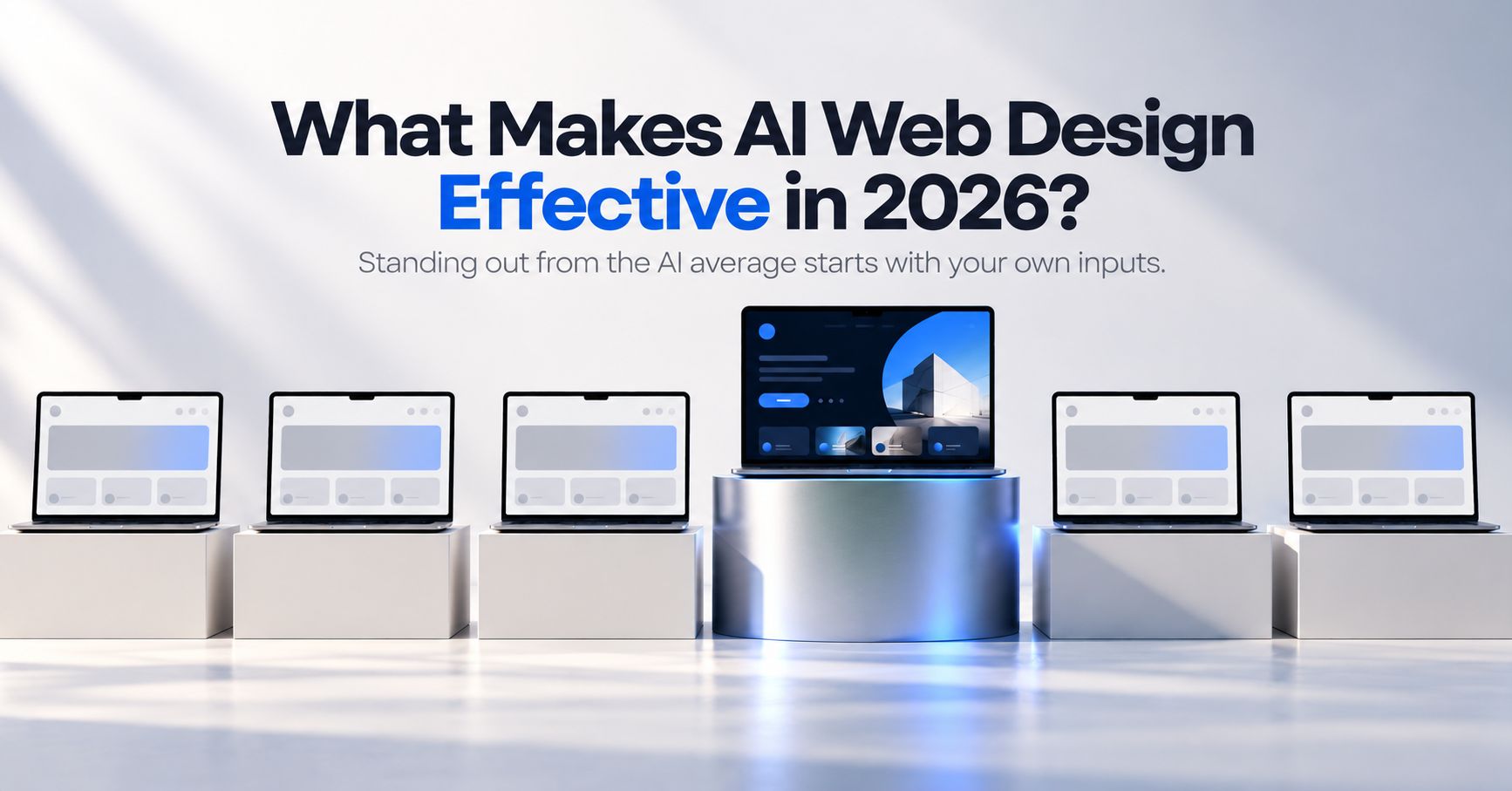
What makes AI web design effective is simple to say and harder to pull off. AI web design works when the tool handles speed (layouts, first drafts, repetitive builds) and a person owns the decisions: who the site is for, what it should make them do, and what makes the brand worth remembering. Leave AI to decide those things and you get a site that looks fine and converts like wallpaper.
I’m writing this because a lot of founders are launching sites built in an afternoon and wondering why nobody remembers them a week later. If that’s you, this one’s for you.
Key takeaways
Contents
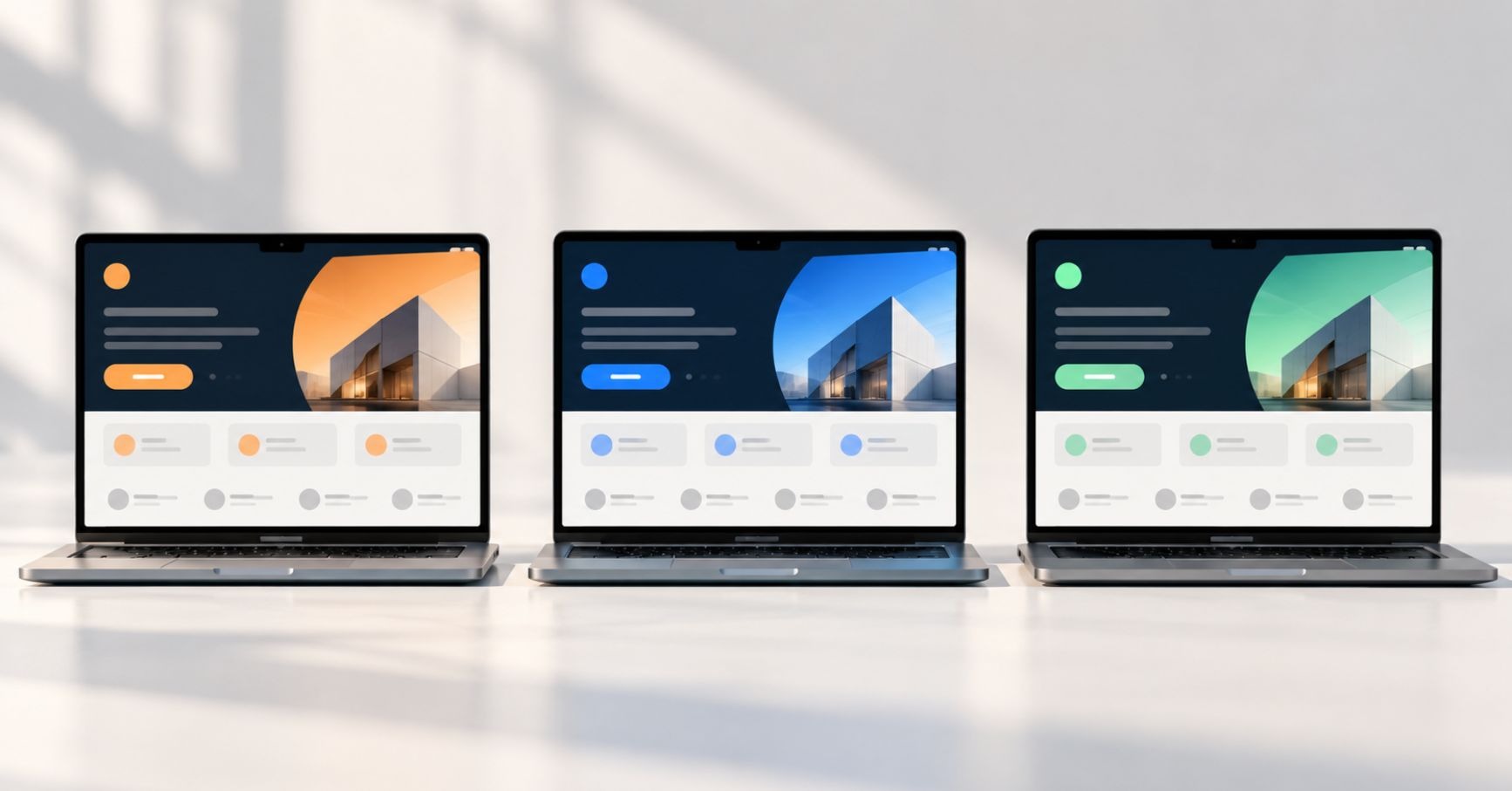
AI-built websites look alike because generative models are built to produce the most likely answer to a prompt. Ask for “a modern SaaS landing page” and you’ll get the statistical middle of every SaaS landing page the model has seen: the centered headline, three feature cards, a gradient, a testimonial strip.
Think of it like asking someone to write a wedding toast by averaging a thousand wedding toasts. Every line would be reasonable and nothing would be about your couple. That’s roughly what happens when the prompt is the only brief.
It isn’t a bug, either. Predictability is what makes AI fast and safe. The trouble starts when a business mistakes “safe” for “good,” because the whole point of a website is to make one company feel different from the five tabs a visitor has open next to it.
Yes, AI website builders can create professional-looking designs, and often in minutes. Unique is a different matter. Uniqueness comes from inputs the AI doesn’t have unless you give them: your brand system, your customers’ language, your real photos, and opinions about what to leave out.
A hardware store can mix you a perfectly professional beige in seconds. The paint isn’t the problem. The color only becomes yours when someone decides what the room is for. They still build from what you feed them.
So the honest answer to “can AI make my site unique?” is that it can execute uniqueness you’ve already defined. It can’t invent the reason someone should pick you.
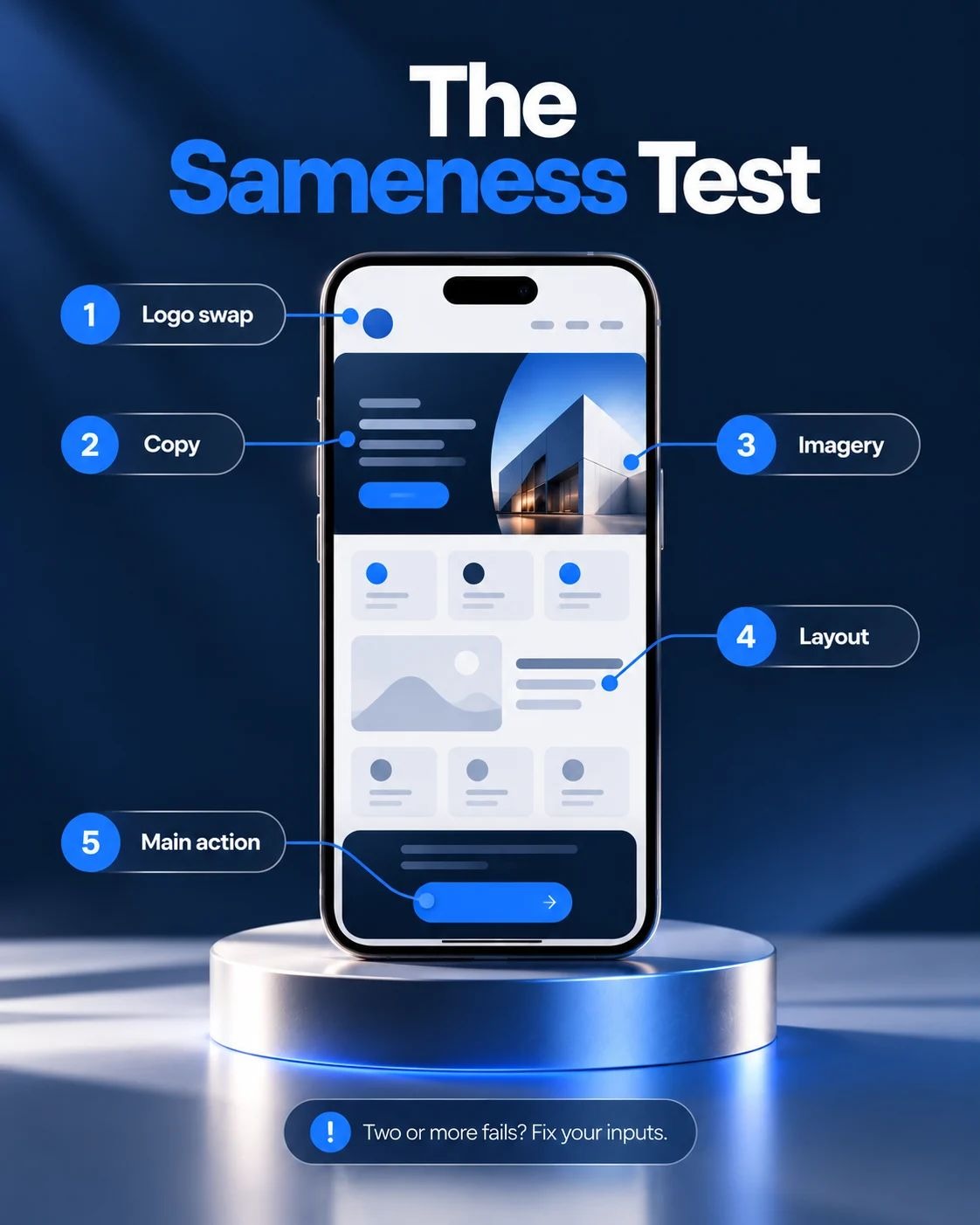
You can usually spot an unedited AI site in about ten seconds by checking five fingerprints. If three or more show up on your homepage, visitors probably can’t tell you apart from a competitor.
Here’s the useful part: each fingerprint tells you which decision was skipped. Generic copy means positioning was never written down. Default order means nobody mapped the buyer’s questions. That turns the test into a to-do list.
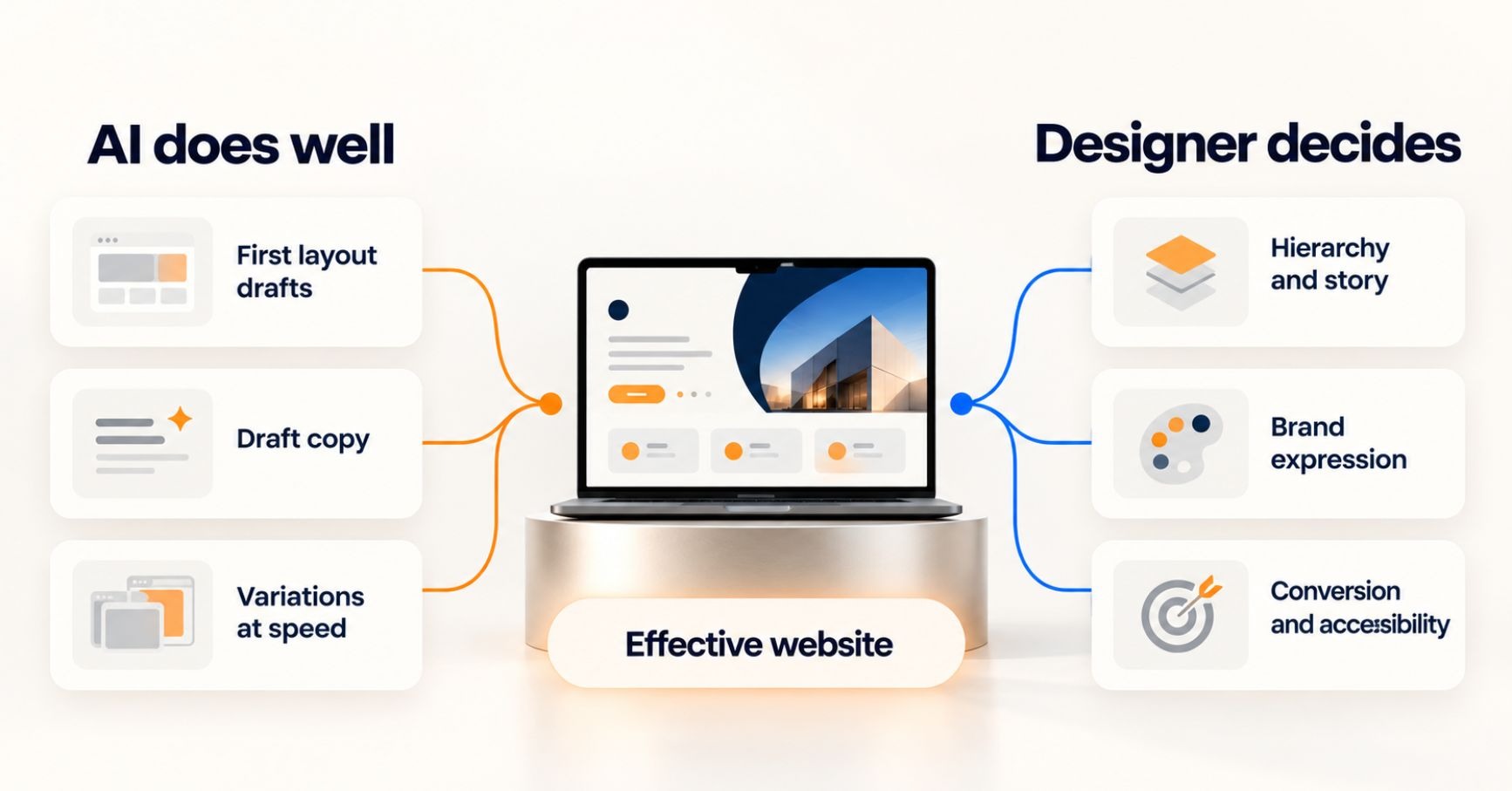
Effective AI web design starts with a clear brief and ends with human editing. In between, the AI does the heavy lifting. The brief covers audience, goal, brand system, and real content. The editing makes sure every section earns its spot.
Picture two bakeries using the same AI builder. The first types “bakery website, warm and modern” and publishes. The second uploads its real photos, writes down that most orders come from office managers ordering for meetings, and asks for a page built around a fast bulk-order flow. Same tool, completely different business result, because the second bakery brought decisions to the tool.
This is how we work at Seative Digital. AI speeds up research, exploration, and repetitive production, and experienced designers refine every output. Our process still starts with Product Understanding and User & Market Analysis before anything gets generated, because those steps are where the uniqueness comes from.
A few things matter more than the tool you pick:
If you’d rather have a team handle the strategy-heavy parts while AI handles the speed, our Webflow development services are built around that split.
AI should own speed and volume, and humans should own judgment and meaning. The table below is the split we’d suggest for most small and mid-size business sites.
Notice the pattern in the right-hand column. The human column is never about pixels. It’s about context the AI simply wasn’t given.
Measure an AI-built site the same way you’d measure any site: conversion rate on your main goal, how far people scroll, whether they understand what you sell, and how fast pages load. Launch speed doesn’t count, because visitors never see how long the site took to build.
A practical check is to show the homepage to three people in your target audience for five seconds, then ask what you do and who it’s for. If they hesitate, the fingerprints are winning. Pair that with analytics on your primary CTA and a Core Web Vitals report from Google Search Console.
At Seative Digital, we’ve seen engagement improvements of up to 40% from structured, research-led redesigns. That figure is company-wide, and results depend on the project.
Can AI design a whole website on its own?
AI can generate a complete, working website on its own, including layout, copy, and basic styling. Whether it’s a good website is another question. Without a clear brief, brand system, and human review, you’ll usually get a polished but generic site that doesn’t say why someone should choose you over a competitor.
Why do AI websites all look the same?
AI websites look similar because generative models produce the most typical answer to a prompt. Vague prompts get the averaged result, like centered heroes, feature cards, and soft gradients. Feeding the tool your real content, photos, and design system is the fastest way to break that sameness.
Is an AI website builder good enough for a small business?
For a simple brochure site or a quick launch, an AI builder is often good enough, as long as you write your own headline and offer and replace placeholder imagery. If your site needs to sell, book appointments, or explain a complex product, budget for strategy and design time too.
Will Google penalize an AI-built website?
Google’s guidance focuses on whether content is helpful and original, not on whether AI was involved [VERIFY: Google Search Central guidance on AI-generated content]. A thin, generic AI site can still underperform simply because it doesn’t satisfy searchers. Useful, accurate, original pages are the safer bet whatever tools built them.
What’s the best AI website builder in 2026?
The best AI website builder depends on what you need after launch. Webflow suits teams wanting design control and a CMS, while simpler builders suit fast single-page sites [VERIFY: current platform capabilities]. Pick based on how you’ll edit, scale, and optimize the site over time.
How much human design work does an AI site still need?
Most AI-built sites still need human work on positioning, page structure, brand system, accessibility, and final copy. That’s usually a fraction of a full custom build, but it’s the part that decides whether the site converts. Treat the AI output as a strong first draft, not the finished product.
AI didn’t make good design cheap. It made average design free, which raises the bar for everything else. What makes AI web design effective is the same thing that made web design effective before AI: clear decisions about who you serve and what you want them to do, now executed much faster. Run the Five Fingerprints test on your homepage this week and fix whichever one shows up first.
If you want a second pair of eyes on it, book a 30-minute strategy call with us. We’ll tell you what’s working and what’s wallpaper.